A full arch of fixed teeth on six implants, for jaws that need the extra support
A full arch rebuilt on six implants instead of four — extra support for a wider bite or softer bone.

 1000+ Google reviews

 Excellent on Trustpilot
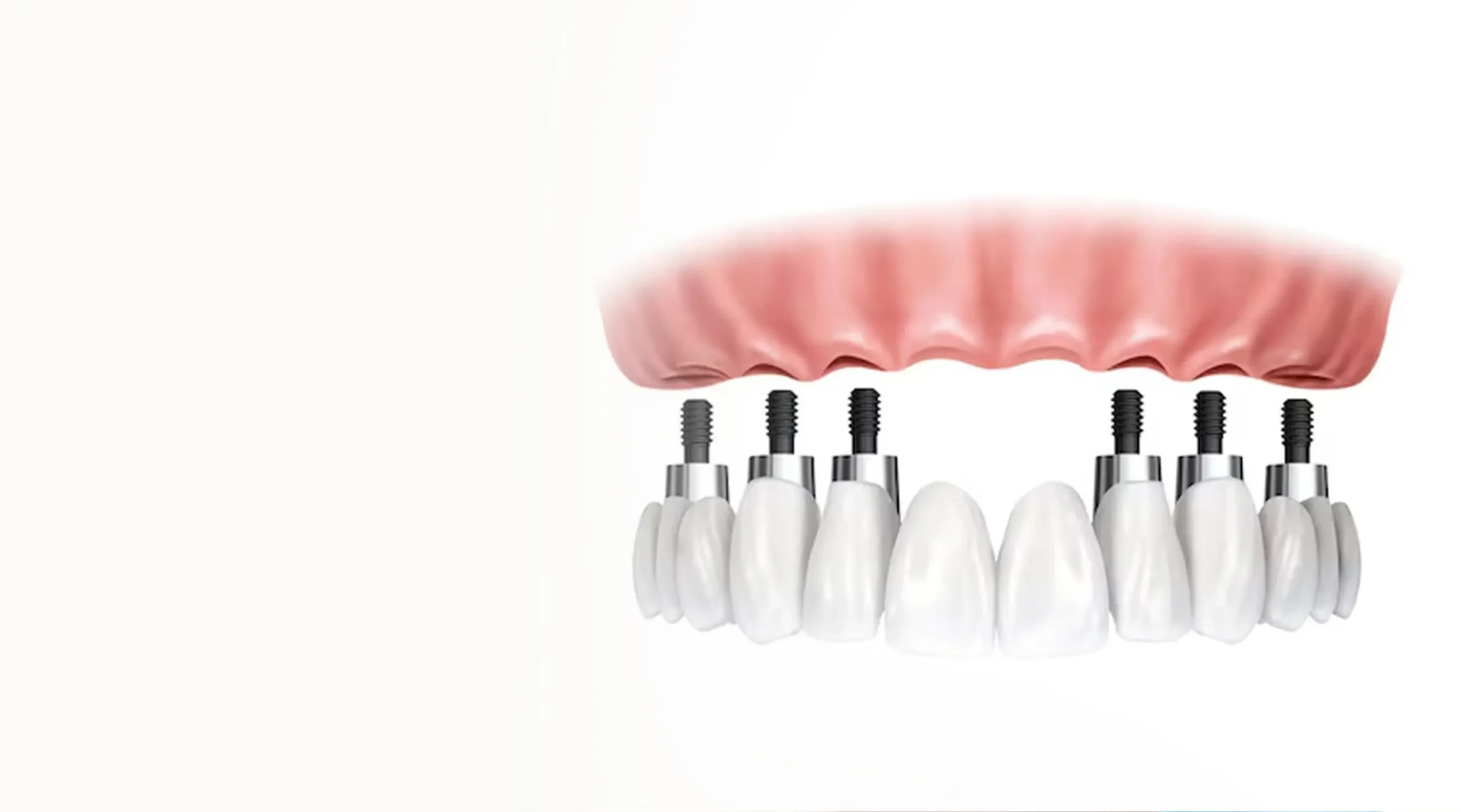
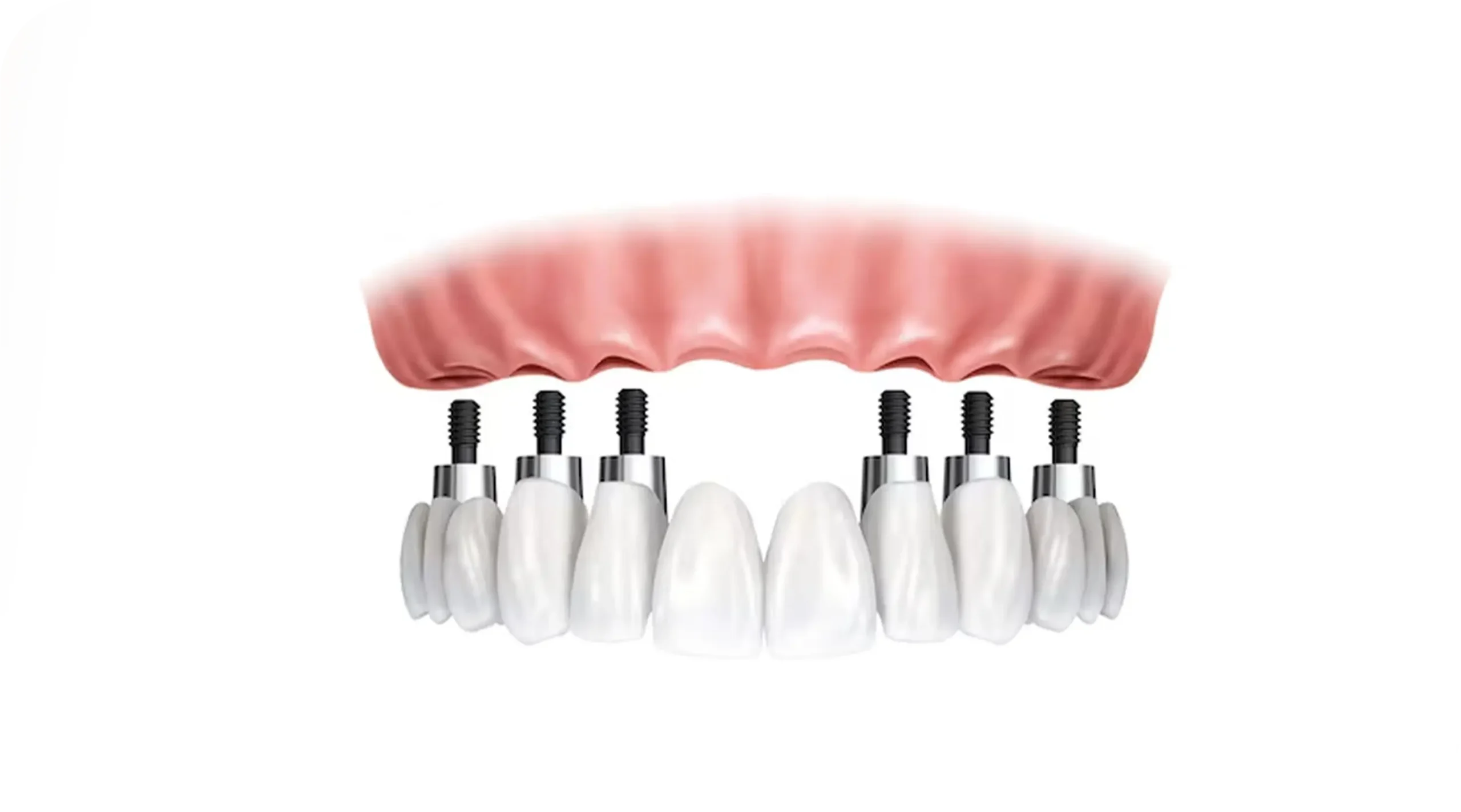
All-on-6 rebuilds a complete arch of fixed teeth on six implants instead of four.
Two extra implants sounds like a straightforward upgrade. It is not. Six is a clinical decision that your jaw either justifies or does not, and the number that suits your bone is the number you should be paying for.
Spread across six points rather than four, bite force arrives at the bone in smaller amounts in more places. The span of bridge hanging unsupported behind the rearmost implant — the cantilever — gets shorter, and a shorter cantilever is a less stressed one. For someone with a heavy bite, that difference is structural rather than cosmetic.
Six also builds in redundancy. If an implant is ever lost, an arch carried on six has a realistic chance of continuing on five while the problem is dealt with. On four, losing one is a far bigger event.
The upper jaw is the usual case. Bone in the upper jaw is naturally softer and less dense than in the lower, and it gives an implant less to grip. Where the scan shows that, six implants share the work in a way four cannot.
Heavy bite force is the other. Patients who grind or clench generate loads well beyond ordinary chewing, and a full arch under that kind of force benefits from more anchor points and a shorter overhang.
If your scan supports four, six adds cost without adding benefit, and we will say so. Every implant is a surgical site, a set of components and one more place where something can eventually go wrong. Adding two without a reason means paying more in exchange for more exposure.
This is one of the few decisions in dentistry where the cheaper option is frequently the correct one. We would rather have that conversation before you book a flight than after.
All-on-6 is a full-arch rehabilitation. Six implants are placed into one jaw and a single fixed bridge is secured onto them, replacing every tooth in that arch at once.
The implants are distributed along the arch rather than clustered at the front. Typically four sit in the front and premolar region where bone is densest, and the two rearmost are angled forward to engage solid bone while extending support further back.
That angling is the same principle All-on-4 uses, applied across a wider base. It lets the implants avoid the sinus in the upper jaw and the nerve canal in the lower, which is usually how a full arch gets rebuilt without bone grafting first.
This is the part that matters, and the part most clinics skip.
Every full-arch bridge extends slightly behind the last implant. That overhang is a lever, and the longer it is, the harder it works the implant in front of it every time you bite down. Four implants means a longer cantilever. Six, placed further back along the arch, means a shorter one.
A shorter cantilever puts less stress on the components, the screws and the bone around them. It is the clearest mechanical argument for six, and it is the reason the technique exists at all.
Angled placement is often what makes grafting unnecessary — the implants reach bone you already have rather than requiring new bone to be built first. Where the scan shows genuine deficiency, we say so before you travel, and the graft becomes its own planned step rather than a surprise added halfway through.
MegaGen is our primary system and Straumann the secondary option, chosen per case rather than per price list. Both are named on your written quotation before you commit to anything, along with the material of the final bridge.
On your first visit you receive a fixed temporary bridge. It is screwed into place, you eat with it, and you fly home with a complete set of teeth rather than a gap or a removable plate.
The definitive bridge comes later, once the implants have fused with bone. That takes three to six months and cannot be shortened by technique, technology or money. Anyone offering a permanent full arch in a single week is either calling a temporary bridge permanent, or loading a final bridge onto implants that are not ready to carry it.
On the second visit we take precise measurements of the integrated implants and of your bite, and the definitive bridge is manufactured to those measurements before being fitted and adjusted until it sits correctly. Our zirconia comes from Zirkonzahn in South Tyrol.
Your general health matters as much as your jaw does. Uncontrolled diabetes, active gum infection, heavy smoking and certain bone medications all affect how well implants integrate, so we review your medical history before planning. Most are managed rather than disqualifying — but they need to be known in advance, not discovered halfway through.
The final bridge comes in two materials, each with a different balance of cost, durability and appearance:
A titanium framework faced with acrylic teeth and gum. Lighter and less expensive, though the acrylic surface wears faster and typically needs relining or replacement every five to seven years.
Monolithic zirconia milled from a single block, from Zirkonzahn in South Tyrol. Highly resistant to wear, staining and chipping, with translucency closer to natural teeth. Typically ten to fifteen years or more.
All-on-6 suits people who have lost most or all of the teeth in a jaw and whose bone can carry six implants:
The count is decided by your scan, not by your budget or ours. If four implants will do the job, we will tell you that — and if your bone genuinely calls for six, we will show you why on the scan rather than asking you to take it on trust.
All-on-6 takes two visits to Tirana with a healing period at home in between. That is biology, not scheduling — implants need time to fuse with bone, and no clinic anywhere can compress it.
Send photographs and any recent X-ray or CT scan. Our clinical team reviews the case and returns a preliminary plan — six implants or four, whether extractions are needed, and a written quotation. Free, no obligation.
A full examination and 3D CT scan in Tirana. Bone volume and density at each site decide the final implant count, position and angle. This is the stage that confirms whether six is justified.
Extractions if needed, six implants placed under local anaesthetic, and a fixed temporary bridge secured the same visit. You fly home with teeth, not a gap.
Three to six months while the implants fuse with your jawbone. You carry on normally with the temporary bridge in place, and we stay reachable by phone and email throughout.
Second visit. We measure the integrated implants and your bite, the final bridge is made to those measurements, then fitted and adjusted until it is right.
We tell you whether your scan justifies six implants before you travel, and we show you the scan. The implant system and the bridge material are both written on your quotation. More implants means a bigger invoice, which is exactly why the number should come from your bone rather than from what sells.
Hover over the image to reveal the result. Use the arrows or dots to browse cases.
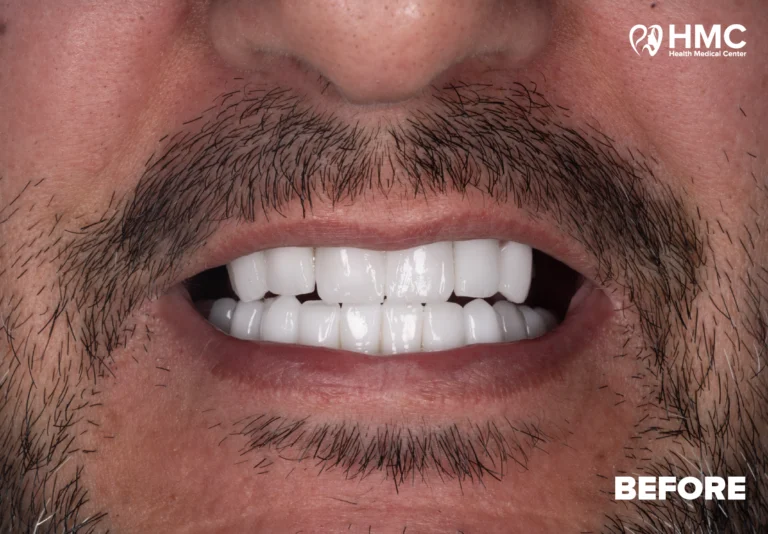
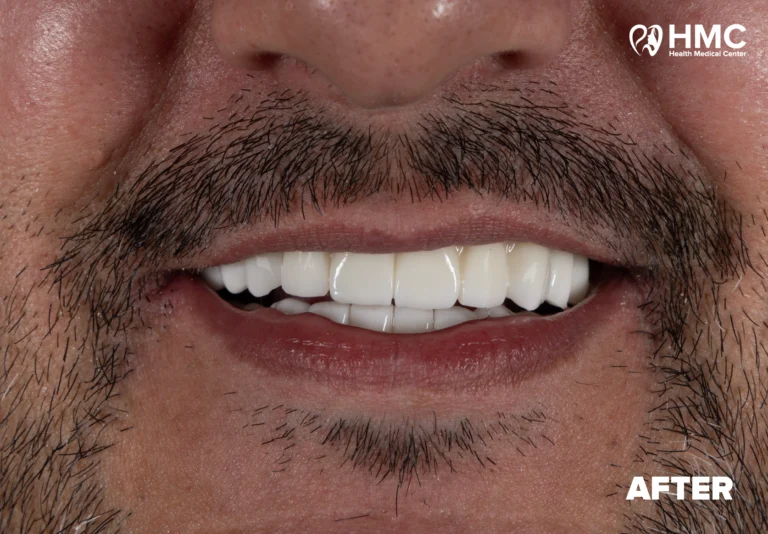
All-on-6 - Front View
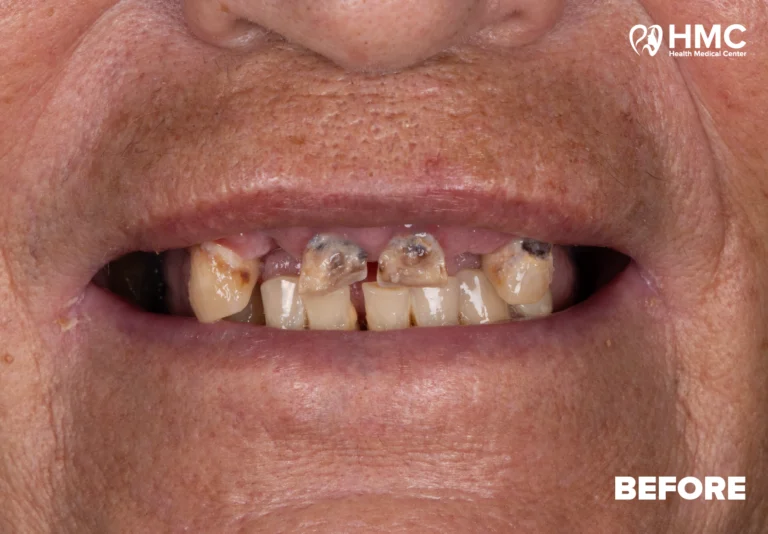
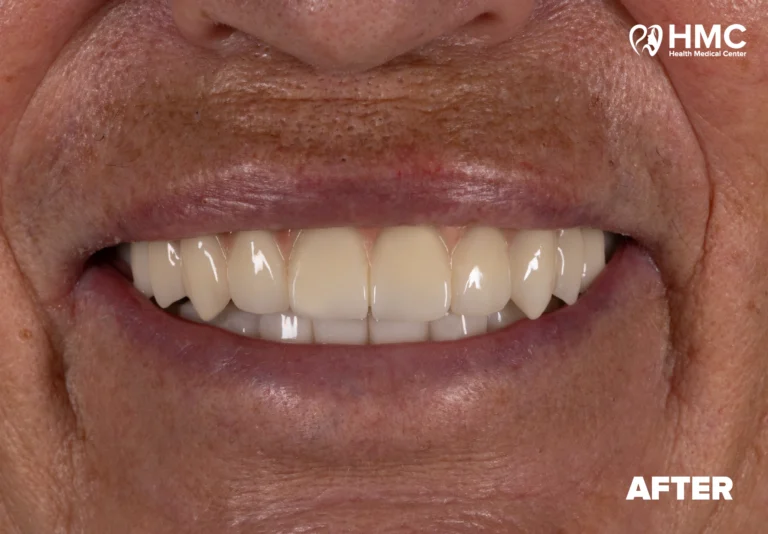
All-on-6 - Smile Revitalization
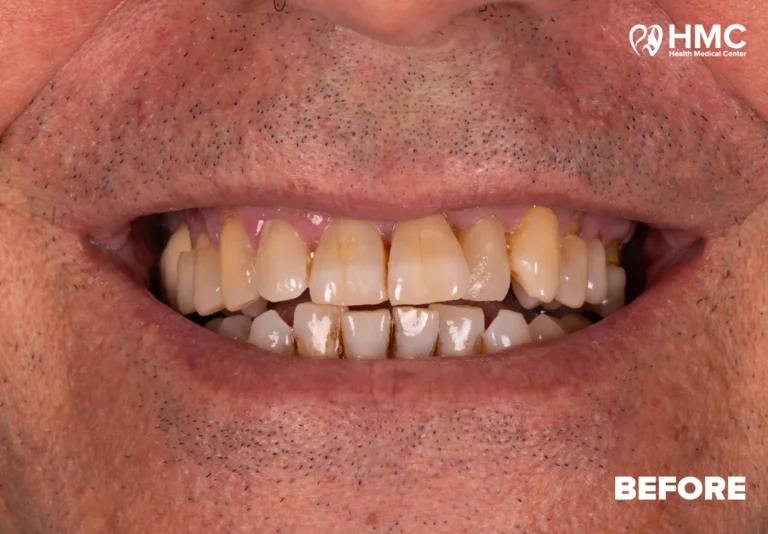
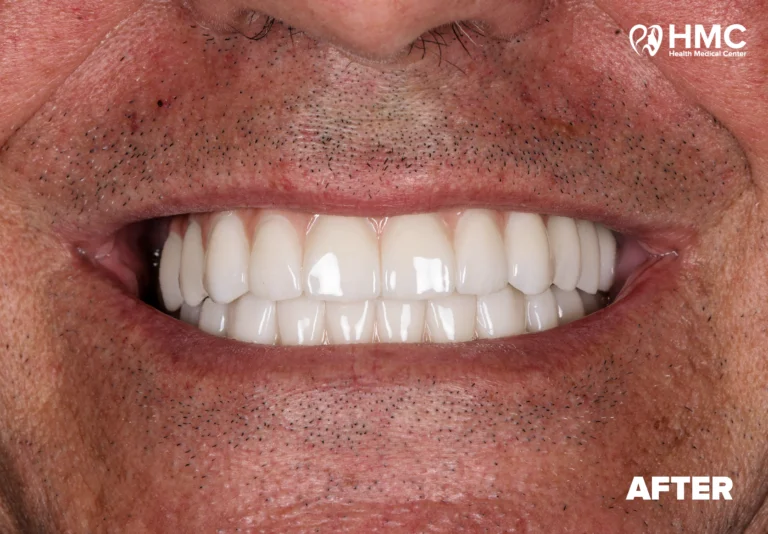
All-on-6 Smile Transformation
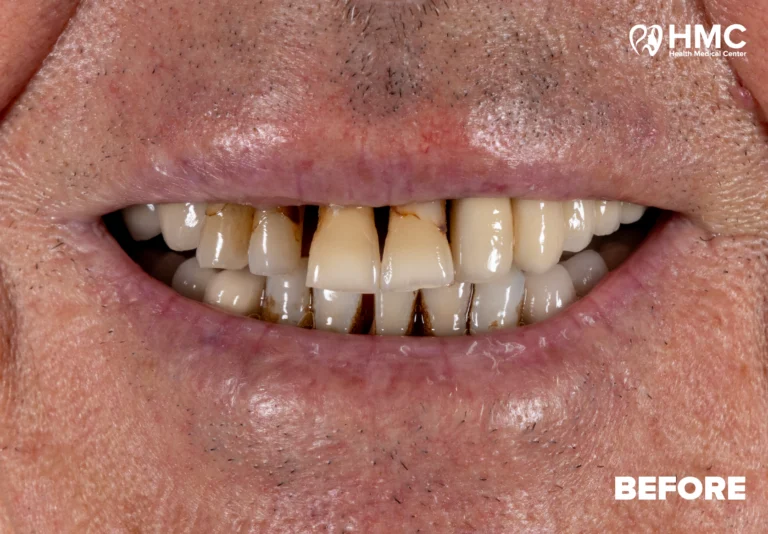
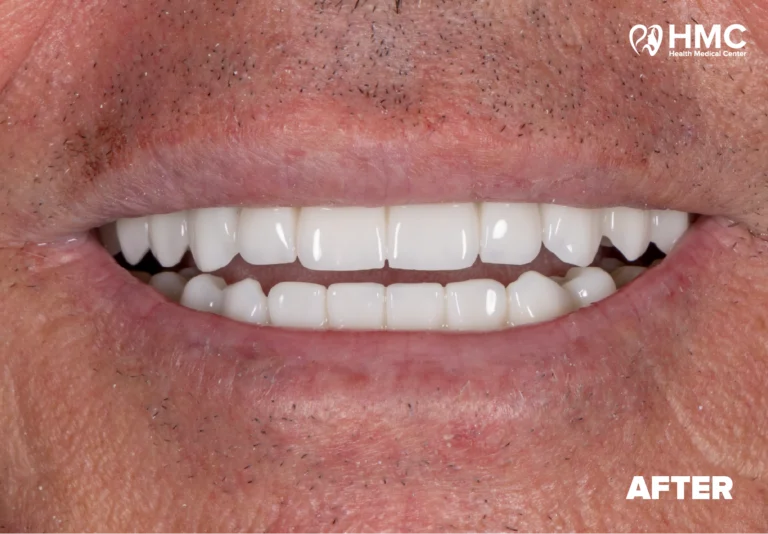
All-on-6 Full Smile Makeover
Explore our full range of treatments
Not automatically. It is better for some jaws and unnecessary for others, and the scan is what separates the two. Six implants distribute bite force across more points and shorten the cantilever — the section of bridge that extends behind the last implant. That reduces stress on the components and the bone. It also means the arch can usually survive the loss of one implant. But All-on-4 is one of the best-documented protocols in modern implant dentistry, and in adequate bone it is highly predictable. Where four will carry the arch, six adds surgery, cost and exposure without adding benefit. We decide from bone volume, bone density and where the force falls when you bite. If your scan supports four, we will tell you that even though six is the larger invoice.
Yes. You leave your first visit with a fixed temporary bridge already in place. It is screwed onto the implants rather than resting on your gums, so it does not move, does not need adhesive, and does not come out at night. You eat with it, speak with it and fly home with it. What it is not is the final result. The temporary is lighter and less refined than the definitive bridge, and it is designed to be worn while the implants integrate. Soft food for the first weeks protects the healing underneath it.
Because the implants are not yet holding. Loading a final bridge onto implants that have not integrated is how full-arch cases fail. After placement, bone grows into the implant surface over three to six months. Until that has happened, the implant is held by the mechanical grip of surgery rather than by biology. A fixed temporary is light and designed to be forgiving of that; a definitive bridge is not. There is also a practical reason. Your gums change shape as they heal after extractions and surgery. A final bridge measured in week one would no longer fit the mouth it was made for by month three. Any clinic advertising a permanent full arch in a single week is either describing a temporary bridge as final, or loading implants early and accepting the risk on your behalf.
Yes, and any clinic telling you otherwise is worth questioning. The first visit covers the surgical work: extractions where needed, the six implants, and the fixed temporary bridge. The second covers the definitive restoration, measured and fitted once the foundation is solid. Between them is the healing period, and that happens at home. There is nothing to attend in Tirana during those months. We would rather be straight about the two visits at the quotation stage than have you discover the second one after you have already committed.
It is worth a second look before you accept that, because a great deal depends on how the assessment was made. Full-arch techniques exist largely to work around bone loss. Angling the rear implants forward lets them engage the denser bone toward the front of the jaw while still supporting the back of the arch, which is often what removes the need for grafting altogether. A panoramic X-ray cannot show this. It flattens a curved jaw into one plane and tells you very little about width. A 3D CT scan measures height, width and density at every proposed implant site. Sometimes the answer is still that a graft is needed. If so, we say it before you travel and plan it as its own step, rather than discovering it mid-treatment.
MegaGen is our primary system, with Straumann as the secondary option where a case calls for it. Both are established manufacturers with long clinical records and full component availability, which matters more than most patients realise. A full arch depends on screws, abutments and parts that have to remain obtainable years from now. Obscure or unbranded implants can become unserviceable when the manufacturer moves on, and at that point a repairable problem becomes a replacement. Whichever system your case uses is written on your quotation before you commit. If a clinic will not tell you what they are placing in your jaw, that is information in itself.
Either an acrylic hybrid or monolithic zirconia, and you choose with the trade-offs in front of you. An acrylic (PMMA) hybrid is a titanium framework faced with acrylic teeth and gum. It costs less and weighs less, but the acrylic surface wears and generally needs relining or replacing every five to seven years. Zirconia is milled from a single block — ours comes from Zirkonzahn in South Tyrol. It resists wear, staining and chipping far better, looks closer to natural teeth, and typically runs ten to fifteen years or more before refurbishment. For patients with heavy bite forces, which is frequently the same group for whom six implants are indicated in the first place, zirconia is usually the better match.
Eventually yes, and considerably better than with a denture. A full denture returns only a fraction of natural chewing power because it rests on gum tissue that was never built to carry load. An implant-anchored arch transmits force into bone, the way teeth do. Most patients get most of their bite back. The sequence matters though. Soft food while the temporary bridge is in place and the implants are integrating, then a normal diet once the definitive bridge is fitted. Very hard items — ice, bones, nut shells — are worth avoiding permanently, with zirconia as much as with anything else.
On six implants, it is usually recoverable without losing the arch. This is one of the real arguments for the technique. An arch carried on six points can often continue functioning on five while the failed site is cleaned, allowed to heal and re-implanted. On four, the same loss is a much larger problem. Failure is uncommon and it clusters around identifiable causes: smoking, uncontrolled diabetes, poor hygiene, and loading implants before they are ready. It usually shows up early, during the integration period, rather than years later. If an implant fails during integration in a case we planned and placed, we deal with it. That is the point of a warranty being written down rather than implied.
Yes. It is the single biggest factor within your control, and for full-arch work the stakes are higher than for a single implant. Implants depend on blood supply to the bone around them. Nicotine constricts exactly those vessels, and the heat and chemistry of smoking impair healing at the surgical site directly. Smokers have measurably higher implant failure rates — one of the most consistent findings in implant dentistry. We will still treat you. But stopping for two weeks before surgery and through the first month after it changes your odds meaningfully, and with six implants and a full arch riding on the outcome, we would rather say so plainly.
Around five to seven days for the first visit, and a shorter stay for the second. The first visit carries the surgical work and the fitting of the temporary bridge, with review appointments in between, so it is worth allowing the full week rather than compressing it. Most patients find the days between appointments are their own. The second visit is measurement, manufacture and fitting of the definitive bridge, with adjustment appointments to get the bite right. We confirm the exact schedule once your 3D scan is reviewed, because extractions and any grafting change it. You get the dates before you book travel, not after.
4.9
/ 1006 reviews
“I travelled from the UK for 3 dental implants and was so nervous, but the team made me feel comfortable and reassured every step of the way. Dr Idris and his team were professional and genuinely caring.”
“My whole experience with HMC has been incredible. I was a bit scared about travelling from the UK to get an implant done, but there was nothing to be scared of. The procedure was quick and painless and they supported me 24/7 once I got back home.”
“I had a great experience with my dental implant. The doctor was very professional, patient, and made me feel comfortable throughout the whole process. The entire staff made the experience easy and stress-free. Would definitely recommend!”
Send us a few details and our patient coordinators will come back within 24 hours with a treatment plan, timeline, and price. No obligation.